Contact Us
Insight India: Latest News on the Indian Export Market
Discover India With Us
India is booming – and in the background, the course for trade, regulations, and investments is constantly being reset. Which new funding package has been approved? Which customs duties are changing? And where are new market opportunities opening up for Styria?
In this newsfeed, we continuously bundle current insights, analyses, and developments regarding the Indian market. Brief, concise, and straight to the point – so that you always stay up to date for your India business.
Here you can see at a glance what may become relevant for your India business.
Current Developments From India
New funding initiative aims to increase production capacity tenfold and reduce international dependencies. Opportunities are opening up especially for companies in mechanical engineering, automation, and industrial supply.
India is taking a further step to strengthen its industrial self-sufficiency. On October 28, 2026, the Indian government approved the Container Manufacturing Promotion Scheme (CMPS) with a total funding volume of 100 billion rupees (around 10,000 crore). The program runs from fiscal year 2027/28 to 2039/40 and aims to develop India into an internationally competitive production hub for freight containers.
The ambitious goals illustrate the economic potential: annual production capacity is set to rise from around 70,000 to 750,000 TEU (twenty-foot equivalent units). With this, India aims to reduce its dependence on imported containers while strengthening domestic supply chains.
Targeted support along the industrial value chain
The program supports both the establishment of new production facilities and the expansion of existing plants. Planned measures include interest subsidies of three percentage points for eligible investment loans, as well as production-related grants for containers that meet international standards.
In addition, the government is providing 1.5 billion rupees for joint testing and certification facilities.
The requirements for local value creation are particularly significant: until 2031/32, eligible manufacturers must demonstrate a local content share of at least 70 percent. From 2032/33 onward, this will rise to 90 percent.
Opportunities for Styrian companies
The planned expansion opens up new business opportunities for Austrian technology providers and industrial suppliers.
Potential lies particularly in welding and forming technology, production automation, steel processing, industrial coating, and testing and quality assurance systems. Manufacturers of specialized components and providers of technologies for special containers could also benefit from the expansion of India’s production capacities.
However, the high localization requirements make clear that long-term market opportunities will increasingly depend on cooperation with Indian
partner companies. Technology licensing, local assembly concepts, and strategic supply partnerships could therefore represent attractive market entry models.
India is increasingly focusing on autonomous aviation systems and is investing around 1.51 billion rupees in the development of a novel heavy-lift aircraft. The project by the Indian technology company ideaForge shows how dynamically the Indian aerospace sector is developing and what opportunities this creates for Styrian technology providers.
The Indian aerospace industry continues to gain importance. In addition to space travel and satellite technology, the focus is increasingly shifting to autonomous aviation systems, innovative transport solutions, and intelligent navigation technologies.
A current example of this is the YETI project by the Indian company ideaForge Technology Limited. On October 14, 2026, the state-run Technology Development Board (TDB) signed a financing agreement for 1.51 billion rupees. With a total project volume of around 3.02 billion rupees, the support is intended to enable the further development of the technology to operational readiness. With YETI, ideaForge is developing an autonomous, unmanned aerial vehicle that can take off and land vertically while utilizing the range advantages of a fixed-wing aircraft. The planned system is intended to transport payloads of up to 200 kilograms over distances of up to 200 kilometers. Operations are planned under demanding conditions, such as in difficult-to-access mountain regions, deserts, or maritime environments. Technologically, the project relies on redundant propulsion systems, autonomous navigation even without a GNSS signal, and advanced communication and control technologies. The financing is intended to support development from Technology Readiness Level 4 to full operational readiness at TRL 9. The targeted performance data must still be proven in the course of further development and certification.
Styrian Know-how Is in Demand
Possible fields of cooperation for Styrian companies range from lightweight construction and innovative materials to sensor technology, power electronics, and propulsion technologies, as well as simulation, test systems, and industrial quality assurance.
Companies from the automation and industrial manufacturing sectors could also benefit from the further expansion of the Indian aerospace ecosystem.
Just recently, an Indian space and geospatial delegation visited the business and research location of Graz. The focus was on the exchange with Styrian technology companies and research institutions as well as the identification of possible fields of cooperation. Projects like YETI show how concretely the Indian demand for sophisticated technological solutions is developing. This could result in new starting points for continuing existing contacts and building further industrial partnerships.
Source: Press Information Bureau, Government of India, October 14, 2026.
India is driving its technological independence forward with a billion-dollar innovation fund. With the selection of the first 19 financing partners, the Research, Development and Innovation Fund is now gaining momentum. This could also result in interesting cooperation and business opportunities for Styrian companies.
India wants to increasingly position itself as an international technology and innovation location. A key component of this strategy is the Research, Development and Innovation Fund (RDI Fund), announced back in 2025, with a total volume of one trillion Indian rupees. On October 12, 2026, the Indian government announced the selection of the first 19 financing partners. These include 14 Alternative Investment Funds and five specialized research organizations. In total, state financing commitments amounting to around 71.3 billion rupees were approved. The selected partners are expected to mobilize additional private capital of at least the same amount. This could make more than 142 billion rupees available for technology-oriented innovation projects in this first financing round alone.
From Research to Market Readiness
The fund focuses on companies whose technologies have already reached a certain level of development. Projects from the so-called Technology Readiness Level 4 (TRL 4), where initial technological components have already been validated under laboratory conditions, are to be supported. The focus is particularly on long-term, capital-intensive developments in strategically important technology fields. India wants to use this to reduce dependence on technology imports, strengthen domestic innovation capacities, and develop internationally competitive products.
For the export-oriented Styrian economy, this development opens up interesting perspectives. Companies from the fields of mechanical engineering, automation, electronics, materials technology, industrial research, and deep tech in particular could benefit from the increasing demand for technological expertise. Direct access to funding for Austrian companies is currently not explicitly provided for. Cooperation with Indian companies, research institutions, or investors who are already part of the supported innovation ecosystem therefore appears more promising. Possible starting points range from joint research and development projects to technology partnerships and the integration of Styrian components and solutions into Indian innovation projects.
India is investing specifically in the development of its own technologies. For Styrian companies, it is worth identifying suitable partners early on and positioning themselves as technology and development partners. Those who actively monitor the Indian innovation market can benefit from new value chains and long-term cooperations.
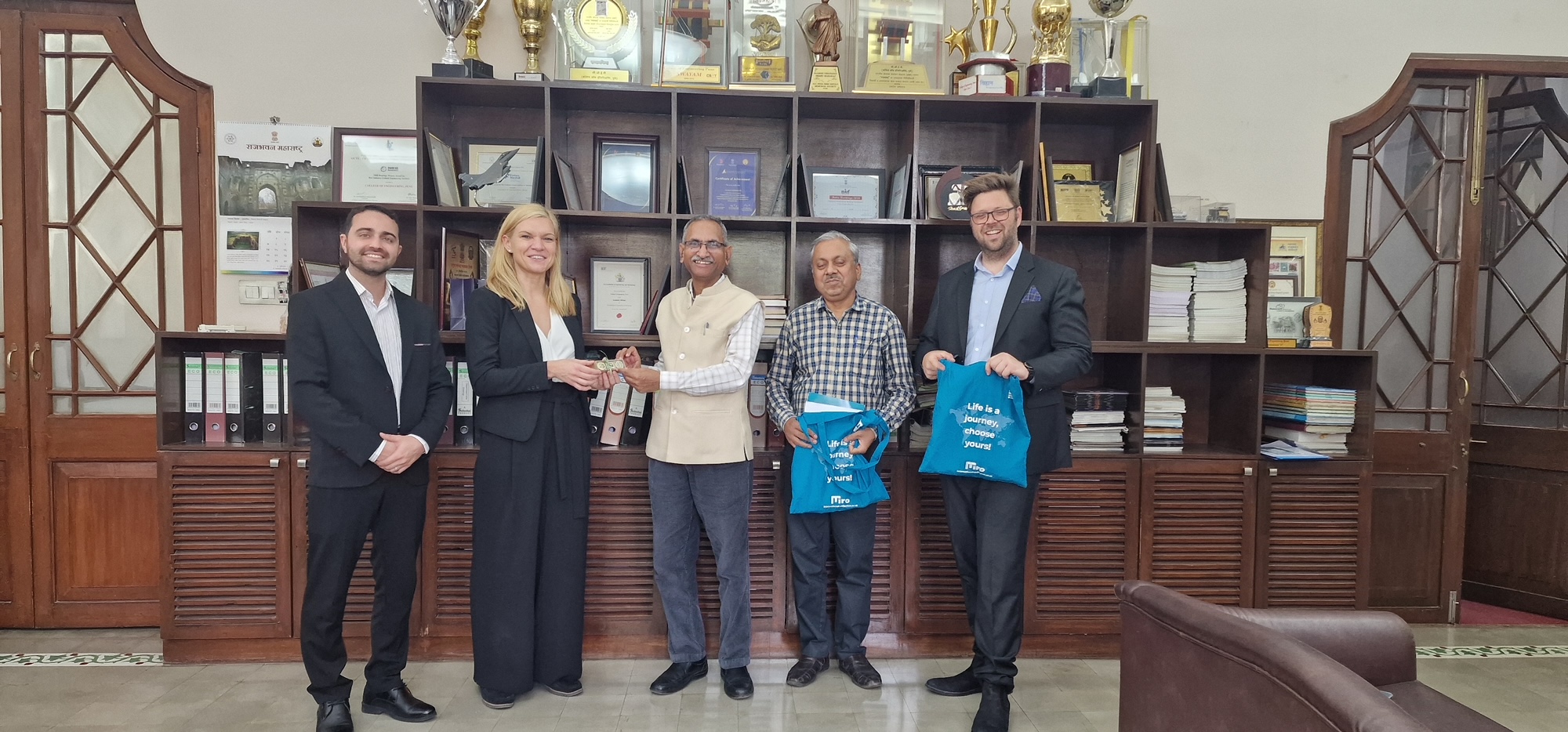
Austria and India are further expanding their cooperation in the field of geodata. The Federal Office of Metrology and Surveying (BEV) and the Survey of India, India’s national surveying and mapping authority, have signed a Memorandum of Understanding (MoU) to this effect. The focus is on the exchange of knowledge and experience in the fields of geodesy, cartography, and geodata infrastructure, as well as digitalization and innovation.
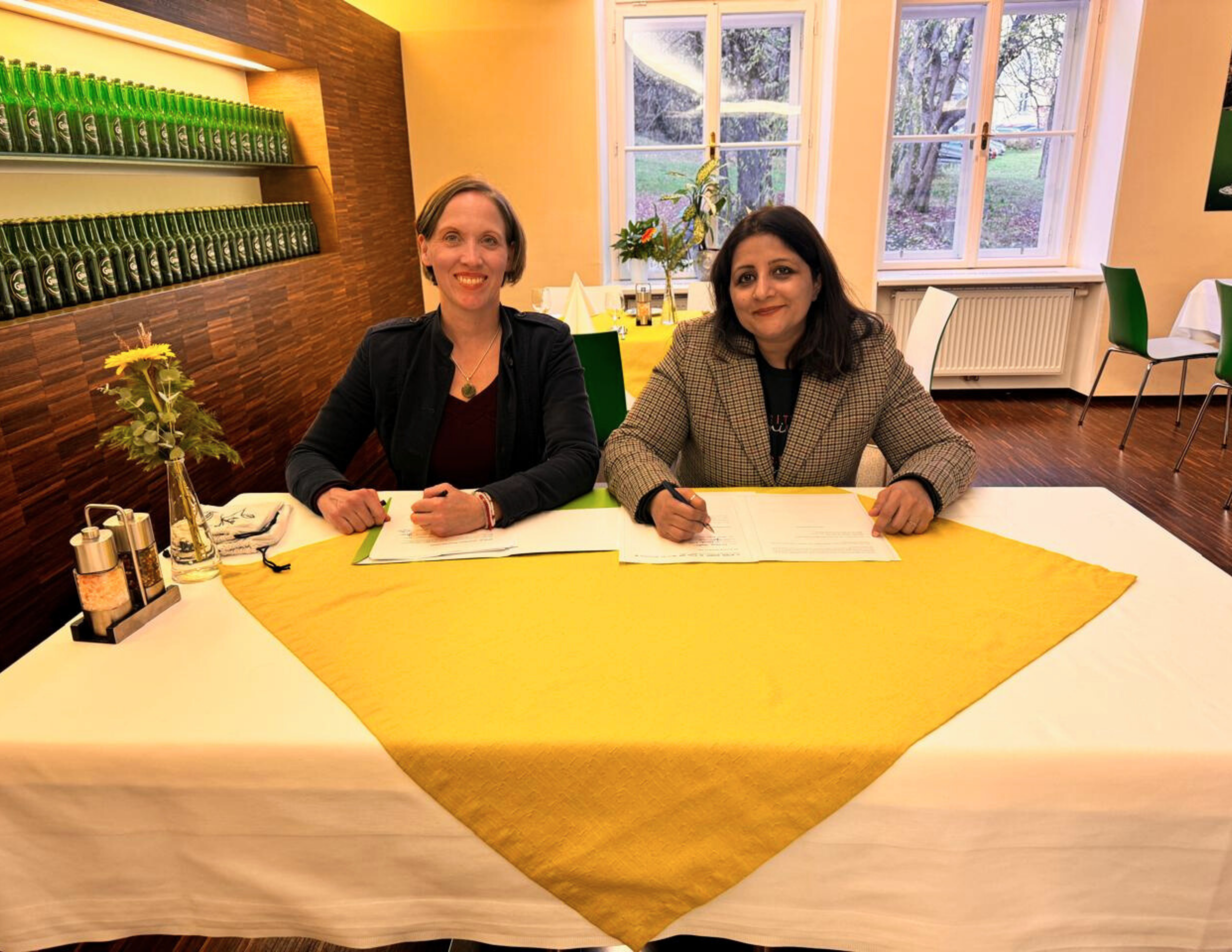
The exchange also brings a concrete connection to India for Styria: As part of the visit, an agreement was concluded between the Indian company Roter Precision Instruments Pvt. Ltd. and the Graz-based Drone Rescue GmbH. This makes the Austrian-Indian cooperation visible at the corporate level as well.
Roter Precision Instruments is active in the field of drones as well as surveying and mapping technologies and offers, among other things, solutions for professional geodata applications. With the agreement, Drone Rescue GmbH is expanding its connection to the Indian market.
The MoU is thus also an example of how Austrian-Indian cooperation is taking concrete shape at the corporate level and how Styrian technology companies are finding points of contact in India.
The European Commission has now submitted its proposals for the signature and conclusion of the agreement to the Council. At the same time, the tariff reduction lists of the EU and India were also published. This makes it concretely visible for the first time which products and sectors could benefit from reduced or completely eliminated customs duties in the future. Anyone who wants to know how the agreement could affect specific goods, sectors, or customs tariff numbers can now specifically check the respective tariff reduction obligations.
However, the political ratification process has not yet been completed. According to current assessments from Brussels, the agreement could enter into force or be provisionally applied in the course of 2027 – presumably in the first or second quarter. The specific timing depends on the further procedure in the Council, the European Parliament, and on the Indian side.
Now is a good time to deal early on with possible effects on your own product portfolio, existing India business, and future market entry strategies.
The published treaty texts and tariff reduction lists are currently available here in English.
Further information on the agreement is also available on the updated website of the Austrian Federal Economic Chamber.
India is strongly expanding its capacities for renewable energies. At the same time, the demand for solutions that can compensate for fluctuations in solar and wind energy and store electricity on a large scale is growing. Pumped storage power plants are playing an increasingly important role in this.
With the Saidongar-1 Karjat Pumped Storage Project in the western Indian state of Maharashtra, India’s largest pumped storage power plant with a planned capacity of 3,000 MW is currently being built. The project has now reached an important technical milestone: The so-called Model Acceptance Test (MAT) for the hydraulic components supplied by ANDRITZ was successfully completed.
From Model to Large-Scale Plant
Before turbines and hydraulic components are manufactured in full size, their behavior is checked using a scale hydraulic model. As part of the Model Acceptance Test, the performance and efficiency of the turbines and pumps, as well as cavitation, pressure fluctuations, and other critical operating parameters, are tested.
The successful completion thus confirms essential parts of the hydraulic design before the manufacturing of the large components proceeds further.
Saidongar-1 is being developed by Torrent Energy Storage Solutions Private Limited, a subsidiary of the Indian energy company Torrent Power. ANDRITZ is responsible for the design, manufacturing, installation, testing, and commissioning of ten reversible pump turbines, motor-generators, and the associated electromechanical equipment for the project.
Pumped Storage as a Key Technology for India’s Power Grid
Pumped storage power plants can absorb excess electricity by pumping water into a higher-level reservoir. When electricity demand rises, the water flows back and generates electrical energy again via turbines. In this way, such plants can help to compensate for the fluctuating power generation from wind and solar energy and at the same time increase grid stability.
According to ANDRITZ, Saidongar-1 is expected to provide an annual energy volume of 6,241 GWh after commissioning and make an important contribution to the integration of renewable energies into the Indian power system.
ANDRITZ Expands Presence in the Indian Energy Market
The project is also an example of how Styrian technological expertise is involved in India’s infrastructure and energy transition. The internationally active technology group ANDRITZ is headquartered in Graz and has decades of experience in the hydropower sector.
Saidongar-1 is not an isolated project: ANDRITZ is currently involved in the implementation of seven new pumped storage power plants in India. The company is thus positioning itself in a market segment that is becoming increasingly important for India with the further expansion of solar and wind energy.
India’s economy has started the new financial year with high momentum. In the first quarter of 2026/27 – from April to June 2026 – real gross domestic product grew by 7.8 percent compared to the same quarter of the previous year. For Styrian industrial and technology companies, it is therefore particularly worth taking a look at the production and foreign trade indicators published by the Indian Ministry of Statistics.
The Index of Industrial Production (IIP), which measures changes in industrial production volume, shows significant increases in several industry-related areas compared to the same quarter of the previous year:
- Manufacture of computer, electronic and optical products: +12.4 percent
- Manufacture of electrical equipment: +27.0 percent
- Manufacture of machinery and equipment: +9.1 percent
For imports of machinery and equipment, MoSPI reports growth of 51.5 percent compared to the same quarter of the previous year. Exports of transport goods rose by 52.2 percent.
What does this mean for Styrian companies?
The figures underline the currently high industrial momentum in India. In particular, the increase in the production of electrical equipment, electronics, and machinery, as well as the sharply risen machinery imports, are clear signals for companies from the fields of mechanical and plant engineering, automation, electronics manufacturing, and testing and measurement technology.
For automotive and mobility companies, the strong development of transport goods exports is also interesting. Growing export-oriented production can bring additional requirements for manufacturing technologies, quality assurance, and efficient supply chains.
However, the current values should not be interpreted as an immediate guarantee for additional orders. A single quarter can be influenced by base effects, large-scale investments, or individual trade movements. For Styrian companies, however, the figures provide further evidence that India’s industrial expansion is currently gaining momentum, and that market opportunities for specialized technology providers may arise as a result.
India is emphatically continuing the expansion of its industrial infrastructure and is making so-called “plug-and-play industrial parks” a key component of its manufacturing strategy. For international companies, these industrial parks offer the opportunity to set up production and manufacturing sites much faster and with less administrative effort.
The focus is on the Bharat Audyogik Vikas Yojna (BHAVYA) approved by the Indian government, which provides for the establishment of 100 modern industrial parks with extensive state support. The goal is to attract investment, strengthen the competitiveness of India as a location, and create new jobs. The parks are to have already developed plots, basic infrastructure, and modern supply and logistics solutions, thereby significantly shortening the time until the start of production.
The plug-and-play concepts are particularly attractive for international investors, as they reduce many classic challenges in site development. These include already prepared industrial areas, existing energy and water supplies, shared infrastructure, and increasingly digitalized approval processes via single-window systems. As a result, companies can significantly shorten their market entry times and minimize investment risks.
Several states – including Tamil Nadu, Gujarat, Maharashtra, Telangana, Karnataka, and Uttar Pradesh – are continuously expanding their own programs and industry-specific industrial clusters. The focus ranges from electronics and the automotive industry to pharmaceuticals and life sciences, textiles, logistics, and Global Capability Centres (GCCs).
For Austrian companies, this development enables new opportunities in the context of production relocations, supply chain diversification, and investments in the Indian market. The selection of a suitable location is increasingly determined not only by costs but also by sectoral specialization, connection to supply chains, and the respective funding and incentive systems of the states.
The trade mission led by Federal Chancellor Christian Stocker marked an important step towards the strategic deepening of relations between Austria and India. Accompanied by a high-level business delegation with more than 60 Austrian companies as well as representatives from science and industry, the trip was focused on growth, technology cooperation, and new economic perspectives. The focus of the talks with Prime Minister Narendra Modi and Indian government representatives was on intensifying economic cooperation, investment, innovation, and stronger networking between the two countries in future sectors.
A central result of the mission was the signing of several agreements, including a Memorandum of Understanding (MoU) on increased cooperation in the field of defense and security. This creates an institutional framework for cooperation in the areas of defense technology, research & development, cybersecurity, military training, and crisis and disaster management. At the same time, the exchange between industry, research institutions, and state bodies is to be intensified. The agreement is not a military assistance pact, but focuses on knowledge transfer, innovation cooperation, and technological collaboration – particularly in dual-use technologies.
The trip also deepened the growing importance of India as a strategic partner for Austria in the Indo-Pacific region. Federal Chancellor Stocker emphasized several times that both countries should make the best possible use of a common interest, especially against the background of global geopolitical shifts and the search for resilient economic and supply chains. India is increasingly positioning itself as a global technology and industrial location, while Austria wants to specifically open up opportunities for domestic companies in areas such as infrastructure, green tech, defense tech, cybersecurity, aerospace, mobility, and industrial manufacturing.
As part of the trade mission, the India-Austria Business Summit in New Delhi and business forums in Mumbai took place, among others. Contacts with political decision-makers, industrial partners, and innovation actors were established or deepened. The mission made it clear that India is not only a growing sales market for Austria, but is also increasingly becoming a long-term innovation, technology, and production partner – particularly in the context of the Indian “Make in India” strategy and the increased localization of industrial value creation.
Effective April 1, 2026, India has replaced the previous Form 10F with the new Form 41. What looks like a formal change at first glance has noticeable effects in practice – especially for those Austrian companies that provide technical services to India in addition to delivering goods.
These include engineering services, commissioning, maintenance, IT and industrial services, or remote support. Especially in these areas, the new regulation is of immediate relevance for the tax treatment and operational handling of projects.
What is new and what matters now?
In the future, Form 41 will be a mandatory requirement for claiming tax relief from the Double Taxation Avoidance Agreement (DTAA) between Austria and India. This also applies if the Austrian company does not have a PAN (Permanent Account Number) or tax registration in India.
The most important key points at a glance:
- Form 41 must be submitted once per Indian financial year
- It also applies to pure services – regardless of whether they are provided on-site or remotely
- The PAN or TIN of the authorized signatory is required
- There are currently still technical challenges, particularly regarding the correct coverage of the period in the Tax Residency Certificate (TRC)
Particularly relevant: Fees for Technical Services (FTS)
Technical services are often qualified as “Fees for Technical Services (FTS)” in India and are generally subject to withholding tax.
This means that without a correctly submitted Form 41, the Indian client may not apply any DTAA benefits – even if there is no permanent establishment in India. In practice, this quickly leads to higher tax deductions, which directly affect margins and liquidity.
Recommended measures for companies
Against this background, companies with business ties to India should take action promptly.
To-dos:
- Updating existing No-PE declarations in accordance with the new Income Tax Act
- Review of service, maintenance, and project contracts, especially with regard to tax adjustment clauses (“change-in-law” clauses)
- Ensuring that internal processes enable the timely and correct submission of Form 41
Those who check early and adapt their compliance, contracts, and processes can avoid risks and continue to benefit from the advantages of the DTAA.
The war in Ukraine, the increasing tensions between the USA and China, as well as the recently erupted war in Iran and the growing uncertainty in global supply chains have led to the European Union having to redefine its strategic position in the world. Especially in this context, India is gaining importance for European foreign, trade, and industrial policy. Statements by actors such as the President of the European Parliament, Roberta Metsola, for example at events at the Hertie School together with the Jacques Delors Centre, reflect this strategic change. Europe wants to act faster, seek reliable partners, and position itself as a space of stability, predictability, and the rule of law.
India fits into this strategic picture for several reasons. Firstly, India is the world’s largest democracy and traditionally pursues a strategic autonomy in foreign policy that allows the country to cooperate with both Western states and countries of the Global South. For the EU, India is thus a partner that is not only economically relevant but also fits politically into a multipolar world order in which Europe does not want to be exclusively dependent on the USA or China. Secondly, India is one of the fastest-growing large markets in the world. For European companies, the country is thus becoming a central investment and production location, particularly in the areas of industry, digitalization, energy, pharmaceuticals, and infrastructure.
A decisive step in the rapprochement between the EU and India is the free trade agreement, which both sides have negotiated for many years and which is now considered one of the EU’s most important trade agreements. It is intended to reduce customs duties, facilitate market access, and promote investment. But its importance goes far beyond trade. The agreement is also a geopolitical signal with which Europe and India want to deepen their economic integration in order to build more resilient supply chains and reduce their economic dependence on individual markets. In European strategy, this is often discussed under the term “de-risking,” i.e., the reduction of one-sided dependencies without complete economic decoupling.
The strategic dimension of the partnership is particularly clear when it comes to infrastructure and economic corridors. Projects such as the India–Middle East–Europe Economic Corridor (IMEC), which is being discussed as part of the European Global Gateway strategy, are intended to expand trade routes, digital infrastructure, energy connections, and logistics networks between Europe, India, and the Middle East. These corridors are not just economic projects, but also geopolitical instruments. They create new trade routes, reduce dependencies on existing routes, and strengthen political partnerships along these connections. This creates a new geo-economic architecture in which Europe and India function as central hubs.
Parallel to this, security and defense policy cooperation between the EU and India is also being expanded, for example in the areas of maritime security, protection of trade routes, cybersecurity, and the defense industry. This shows that the relationship is increasingly developing from a classic trade relationship into a comprehensive strategic partnership. In a world that is more strongly characterized by geopolitical competition, the EU is specifically looking for partners with whom it can cooperate in the long term economically, technologically, and in terms of security policy, and India is increasingly being seen as one of these key partners.
Source 1 | Source 2 | Source 3 | Source 4 | Source 5 | Source 6
The Austrian technology group ANDRITZ has received a major order from the Indian energy company Tata Power. The company is supplying central electromechanical equipment for the Bhivpuri pumped storage power plant with a capacity of 1,000 megawatts in the state of Maharashtra. The order value is in the low three-digit million euro range.
As part of the project, ANDRITZ is supplying, among other things, reversible pump turbines, motor-generators, and other electromechanical systems, and is also responsible for the planning, manufacturing, installation, and commissioning of the plants. The pumped storage power plant is expected to play an important role in the integration of renewable energies, as such storage solutions are necessary to compensate for fluctuating power production from solar and wind power and to ensure grid stability.
The project is considered an important component for the expansion of the energy storage infrastructure in India and supports the increasing share of renewable energies in the power system.
The Indian government plans to achieve a power generation capacity of 500 gigawatts from non-fossil or clean energy sources by 2030. Around 350 billion US dollars are to be invested for this in the coming years. At the beginning of 2026, the installed capacity from clean energies was already around 267 gigawatts.
By 2035/36, non-fossil power plant capacity could rise to around 786 gigawatts, thereby significantly exceeding the previous expansion targets.
Even today, the expansion of solar and wind energy in particular is growing very strongly. At the same time, energy storage, for example through pumped storage power plants, is becoming increasingly important, as it enables a stable power supply despite fluctuating renewable energy sources.
In March 2026, thyssenkrupp Marine Systems (TKMS) and the Indian defense company VEM Technologies agreed on a strategic cooperation for the joint production of heavyweight torpedoes in India. The basis for this is a teaming agreement that provides for the transfer of German underwater weapon technology as well as the establishment of local production capacities. The goal is to produce modern torpedoes for the Indian submarine fleet in India in the future and at the same time expand industrial capabilities in the country.
As part of the partnership, TKMS – primarily through its subsidiary Atlas Elektronik – is contributing technology, system design, and software to the cooperation, while VEM Technologies is taking over essential parts of production, integration, and final assembly in India. A joint venture is also planned, which could serve as an industrial platform for local manufacturing as well as possible export activities.
For India, the cooperation is part of the long-term defense strategy to produce key military technologies more strongly in its own country. The collaboration enables access to proven European technology, while at the same time national industrial competencies in the field of maritime underwater weaponry are built up. The project thus directly supports the “Make in India” policy in the defense sector and strengthens the technological autonomy of the Indian Navy.
For TKMS, the partnership opens up strategic access to the Indian defense market, which is one of the largest and fastest-growing worldwide, but increasingly requires local production. Through cooperation with an established Indian industrial partner, TKMS is positioning itself early within the national supply chains of the Indian Navy.
From a European perspective, the cooperation is exemplary of a broader trend within the global defense industry. International providers are increasingly securing market access through industrial partnerships, technology transfers, and local manufacturing. The collaboration can therefore be understood as a long-term industrial policy partnership that combines both military procurement interests and strategic market positioning.
With the Union Budget 2026/27, India is strengthening its economic policy course towards sustainable, investment-driven growth. The focus is clearly on structural reforms, strengthening the manufacturing sector, and improving the framework conditions for national and international investors. Short-term fiscal measures are giving way to long-term location policy.
One focus of the budget is the further expansion of the industrial base. India is specifically focusing on promoting strategically relevant sectors such as electronics, semiconductors, biopharmaceuticals, and renewable energies. Programs to strengthen production, research, and infrastructure are intended to deepen integration into global value chains and increase the country’s technological competitiveness.
In addition, the government is also pushing ahead with reforms to simplify tax and administrative processes. The goal is to reduce regulatory complexity, make procedures more transparent, and improve planning certainty for companies. In this way, India underlines its claim to be a reliable location for long-term investments.
The latest budget also provides for further massive infrastructure investments. The expansion of transport and logistics networks as well as industrial corridors is intended to enable productivity gains and strengthen regional development centers. In the process, more and more smaller and medium-sized cities are also coming into focus, thereby opening up new location options for manufacturing companies.
These measures are supplemented by investments in qualification, employment, and innovation. The promotion of education and training as well as the expansion of research and innovation capacities are intended to ensure the availability of qualified specialists and strengthen knowledge-intensive industries.
Overall, the Union Budget 2026–27 focuses on continuity and clear industrial policy signals. For the Styrian economy, this results in concrete points of contact. Technology-oriented industrial companies, suppliers, and plant manufacturers in particular find an increasingly attractive environment in India for production cooperation, local manufacturing, or market development. New business opportunities are also opening up in areas such as mechanical engineering, environmental technologies, materials, and medical technology due to India’s industrial policy focus. Styrian companies also benefit from improved framework conditions for investments, clearer regulatory structures, and the expansion of efficient infrastructure, which further strengthens India as a long-term economic and partner location. In combination with the recently signed India-EU Free Trade Agreement, India is becoming a normal economic partner, and this is also increasingly the case for smaller and medium-sized Styrian companies.
There are free trade agreements that would be “nice to have,” but the agreement with India actually opens up completely new possibilities for the domestic economy. I consider the doubling of the export volume expected by the EU Commission to be too conservative for the Styrian economy: By 2032, I expect India to be among the top 10 domestic export destinations, which would correspond to at least a tripling of the export volume.
And the most populous country on earth will quickly become an even more important partner for bilateral investments (FDI), technology and research cooperation, and in the field of skilled workers in the coming years. We know from our India focus of the ICS, which has now been running for two years, that success in India requires a lot of knowledge, hard work, time, and sometimes support, even with free trade agreements.
We will therefore, in a next step, analyze the free trade agreement in detail with Styrian companies, but of course, until the agreement enters into force, we will continue to offer specific events with the support of ADVANTAGE AUSTRIA:
– PLASTINDIA | New Delhi | February 05 – 10, 2026
– Automotive India Trade Mission | India | March 09 – 13, 2026
– Renewable Energy India | online | August 06, 2026
– Greentech India IFAT Trade Mission | Mumbai | September 07 – 11, 2026
The comprehensive BIS requirement (“Scheme X”) for many machines/plants has actually been withdrawn or repealed. The Indian Ministry of Heavy Industries (MHI) officially repealed the “Machinery and Electrical Equipment Safety (Omnibus Technical Regulation) Order, 2024” effective January 2026, after it had previously been postponed several times. This eliminates the announced BIS certification requirement for broad product groups (HS codes 84 & 85). (Chamber of Industry and Commerce)
The originally planned implementation period (e.g., September 1, 2026) has been canceled: Before the withdrawal, there were various deadline extensions (including an extension to September 1, 2026). Following the withdrawal, there is no longer an active deadline for a general BIS requirement under this specific regulation.
There is currently no new, generally broad-acting requirement for machines under Scheme X. The large Omnibus regulation is not in force, and thus there is currently no comprehensive new BIS requirement that fundamentally covers machine exports. However, existing or specific certification requirements remain in place.
Quality/safety requirements that were already introduced previously through other Quality Control Orders (QCOs) continue to apply. For individual products (e.g., certain electrical components, household appliances, etc.), BIS certification may still be required if they fall under an existing QCO.
The situation remains dynamic. India updates standards and QCOs regularly, and new QCO initiatives (e.g., for machines in certain sectors or electrical devices) are also being discussed or prepared. This could mean that requirements will be activated again for sub-segments in the future.


 16. November 2026
 Bengaluru – New Delhi, Indien
 09:00 Uhr
 © Christof Hütter Photography
Archive 2024-2025
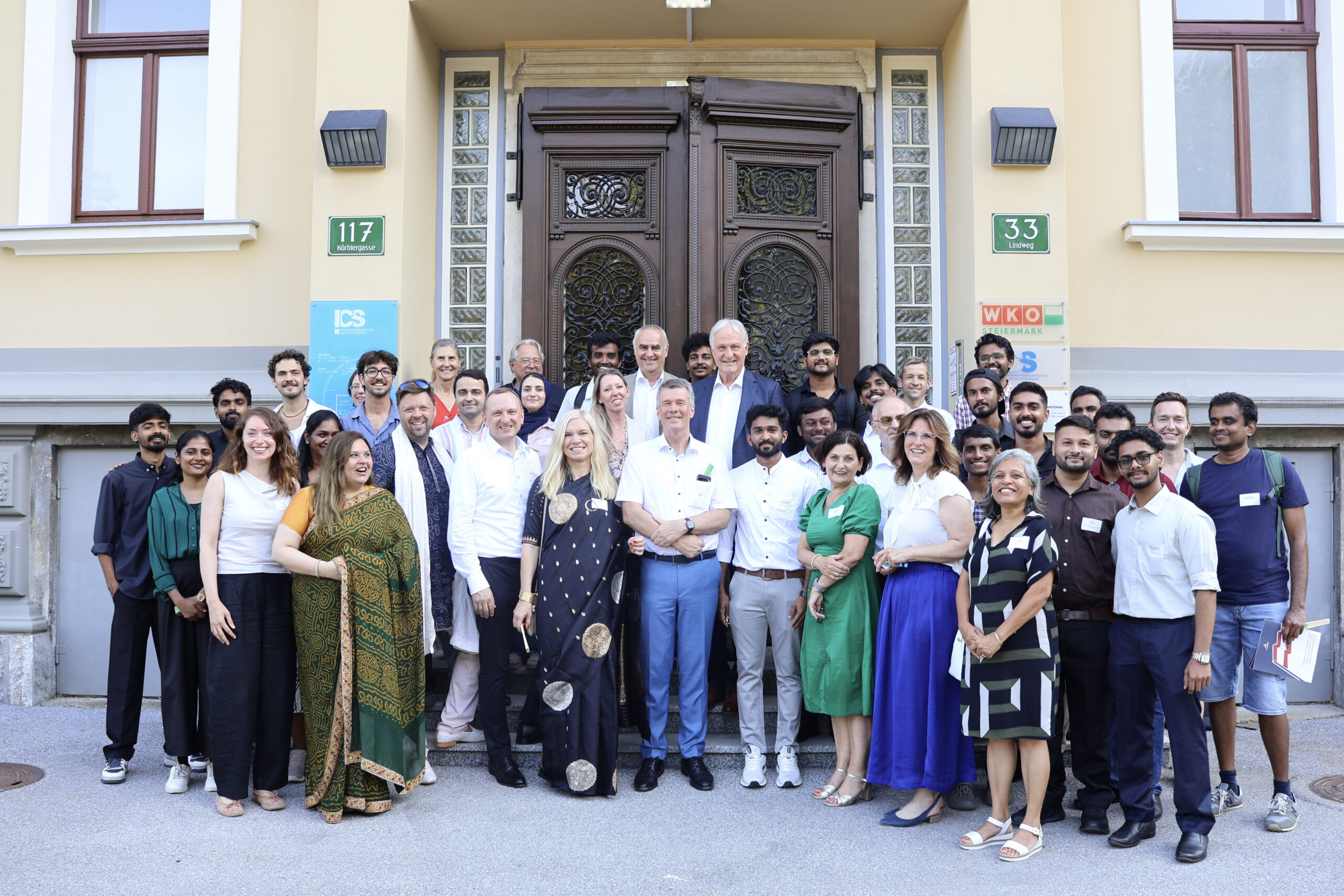
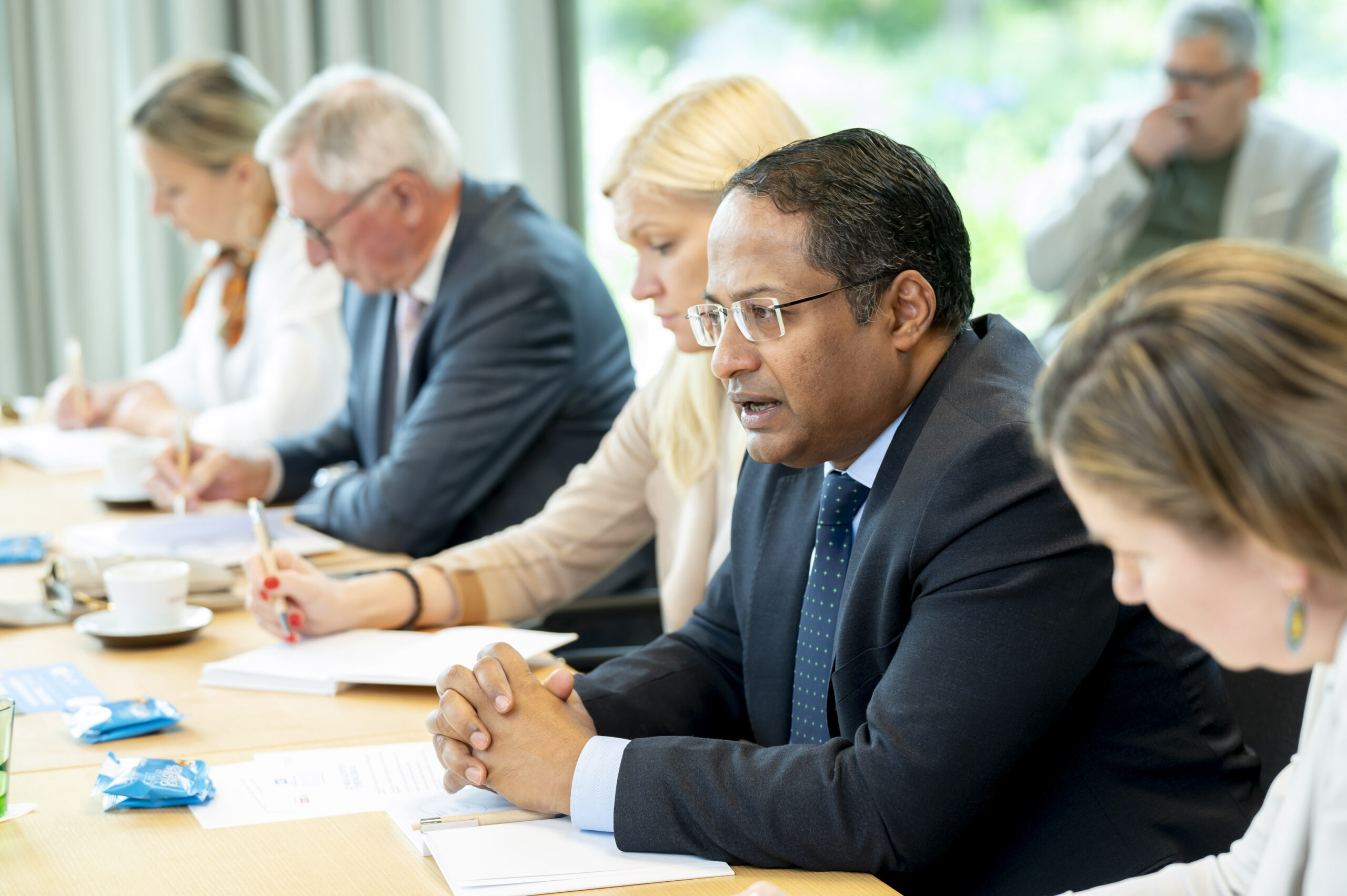
An Austrian business delegation with strong Styrian participation set off for India on Saturday to establish contacts
in the automotive sector in three different regions. It will give domestic companies from the automotive sector the unique opportunity to network directly on-site with leading manufacturers, suppliers, and innovation centers.
You can find the travel diary with all the highlights on the ICS LinkedIn channel!
India’s capital region Delhi wants to remove one of the city’s largest mountains of waste. By the end of the year, the mountain of waste will “no longer be visible from a distance,” and the work is expected to be completed by March of next year.
Source
According to the Automotive Component Manufacturers Association of India (ACMA), the aftermarket for auto components in India grew by 5% in the first half of the 2024 financial year, reaching approximately €5.3 billion. The growth is due to an increase in the used vehicle market as well as the formalization of the repair and maintenance market. The supply of auto components to Original Equipment Manufacturers (OEMs) recorded growth of 11.2%. Furthermore, exports to the USA (28% of total exports) as well as exports to Germany (8% of total exports) and imports from China (28% of total imports) contribute significantly to the growth of the sector.
The market is seeing a shift towards larger vehicles. In the passenger vehicle segment, UVs (Utility Vehicles) grew by 13%. Sales of electric vehicles (EV) rose by 22% overall, while sales of electric PVs (E-PV) fell by 19%. Exports recorded an increase of 7%, resulting in a trade surplus of approximately 140 million euros.
IIT Madras has successfully completed a 410-meter Hyperloop test track, marking a significant milestone in India’s pursuit of ultra-modern transport technology. The project, announced by Union Railway Minister Ashwini Vaishnaw, is being developed by IIT Madras’s Avishkar Hyperloop team in collaboration with TuTr, a startup founded at the institute. The Hyperloop technology, planned globally as a high-speed transport system, is to be tested in two phases: an 11.5 km demonstration track, followed by a 100 km extension. The Mumbai-Pune corridor is expected to be the first Hyperloop project in India, aiming to reduce travel time between the two cities to just 25 minutes.