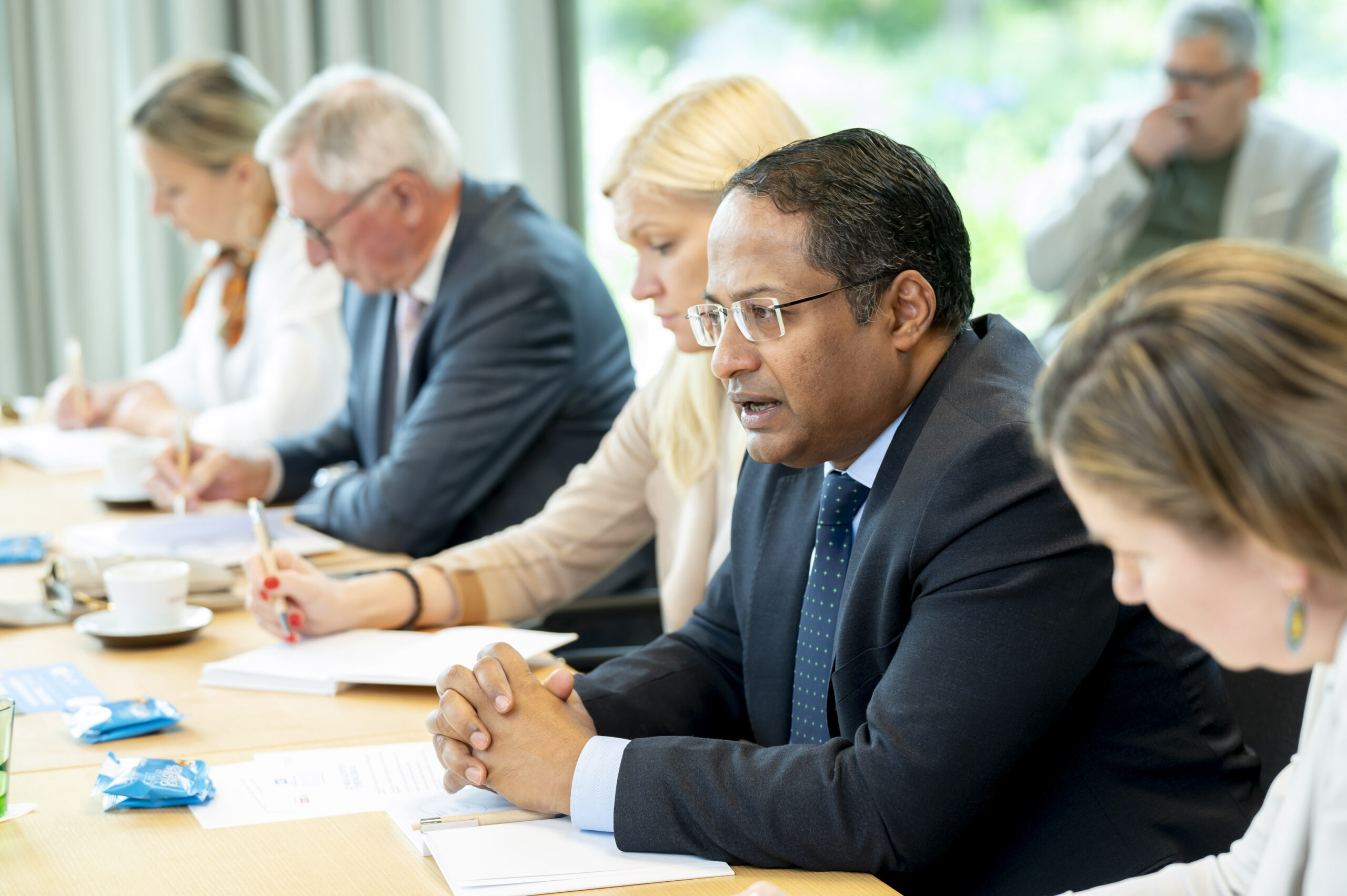
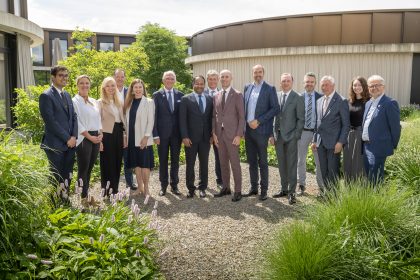
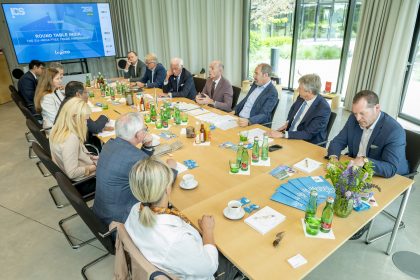
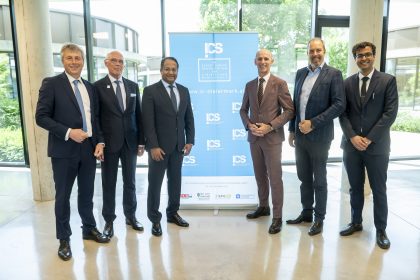
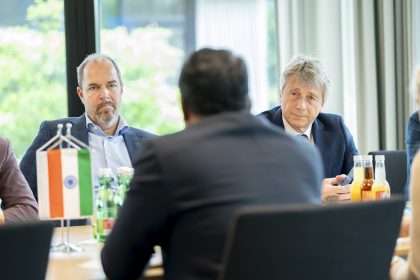
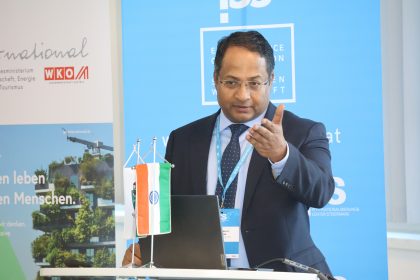
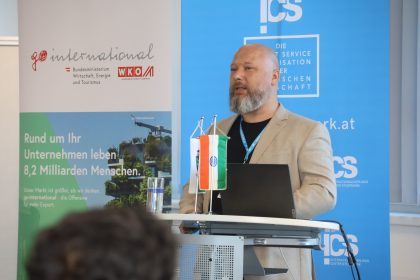
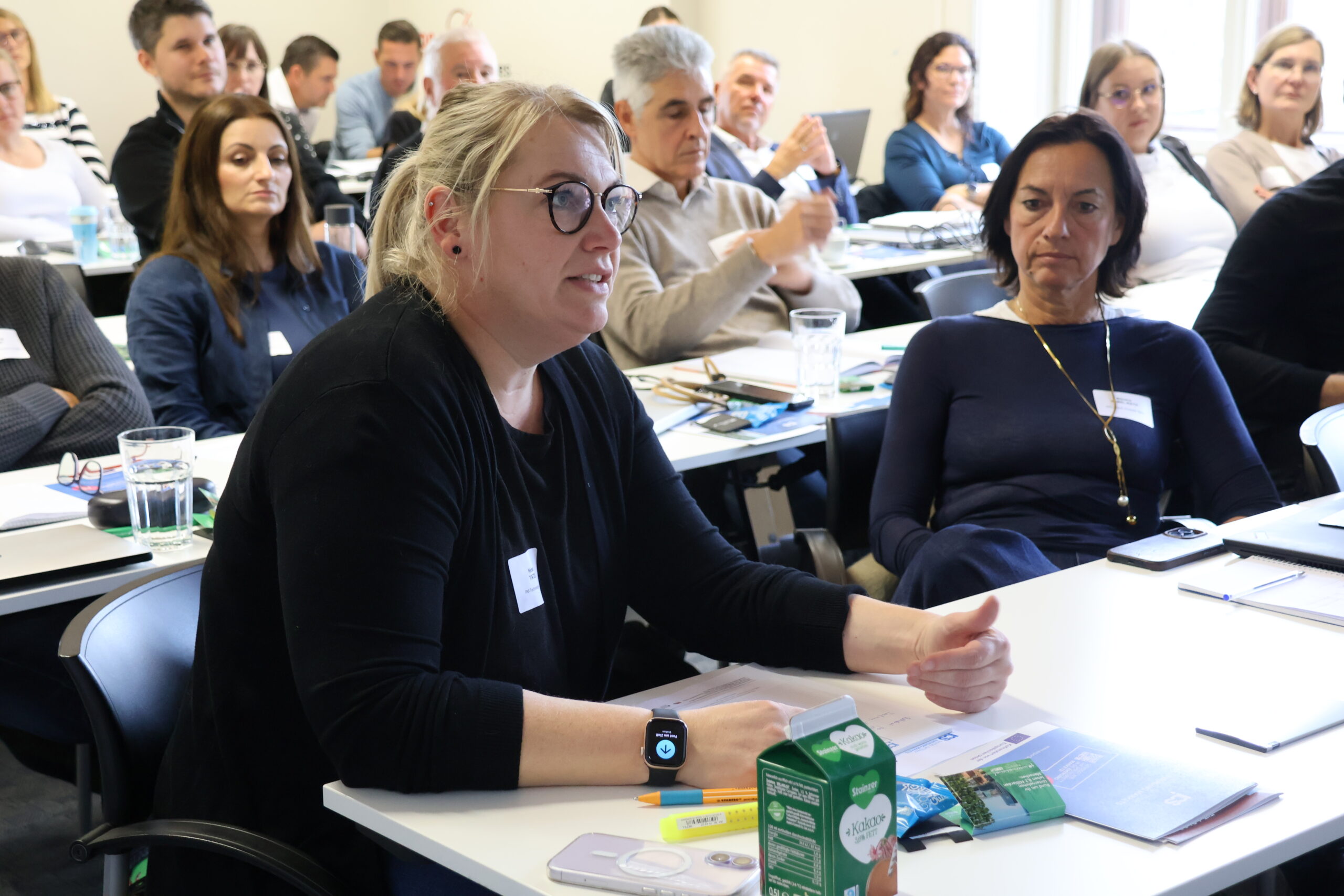
In the afternoon, the event “India: A Market of the Future – Opportunities of the EU-India Free Trade Agreement for Styrian Companies” took place at the Technopark Raaba, with around 40 representatives from various companies in attendance. The aim of the event was to give Styrian companies practical insights into the opportunities of the Indian market and the implications of the planned free trade agreement.
The event opened with welcoming remarks from Karl Hartleb (ICS), Indian Ambassador Shambhu S. Kumaran, and Peter Schreiner of Technopark Raaba. Moderated by Clara Lenz, experts then explored different perspectives on cooperation with India during a series of impulse talks:
Ankur Munjal and Naina Bhardwaj of Dezan Shira & Associates provided a comprehensive overview of the planned EU-India Free Trade Agreement and its significance for European companies. They particularly highlighted the enormous scope of the agreement: around 90 percent of tariff lines, or more than 96 percent of trade volume, are expected to fall under the free trade agreement. It was also explained that the agreement could save around four billion euros annually in tariffs on EU exports. In addition, the speakers pointed out concrete opportunities in areas such as mechanical engineering, mobility, green tech, electronics, pharmaceuticals, and industrial automation.
Morten Bay Jensen, COO of legero united, spoke about the company’s practical experience in building a greenfield development project in Vellore, India. He described how the site grew from just two employees in 2017 to a modern production hub now employing around 1,400 people. He also shared insights into success factors, challenges, and India’s strategic importance as an alternative to traditional production locations in Asia.
Susanne Feiel from the Montanuniversität Leoben presented the new cooperation model between TU Austria and India. The focus was on topics such as skills development, technology and knowledge transfer, and joint innovation projects in future-oriented sectors such as sustainable technologies, infrastructure, and mobility. Particular attention was paid to building long-term talent pipelines and partnerships with Indian universities to help address the shortage of skilled professionals in STEM fields.
Roman Wratschko, founder of Edelweissdesign, also offered fascinating insights into the particularities of product development and design strategy in the Indian market. Using examples such as Jio, UPI, and IKEA, he illustrated why successful European concepts cannot simply be transferred to India unchanged. Topics covered included “design for the masses,” local user needs, cultural habits, and the importance of co-creation and digital infrastructure for sustainable market success. Wratschko also shared personal experiences from his international design and innovation work in India.


 Contact Us