Contact Us
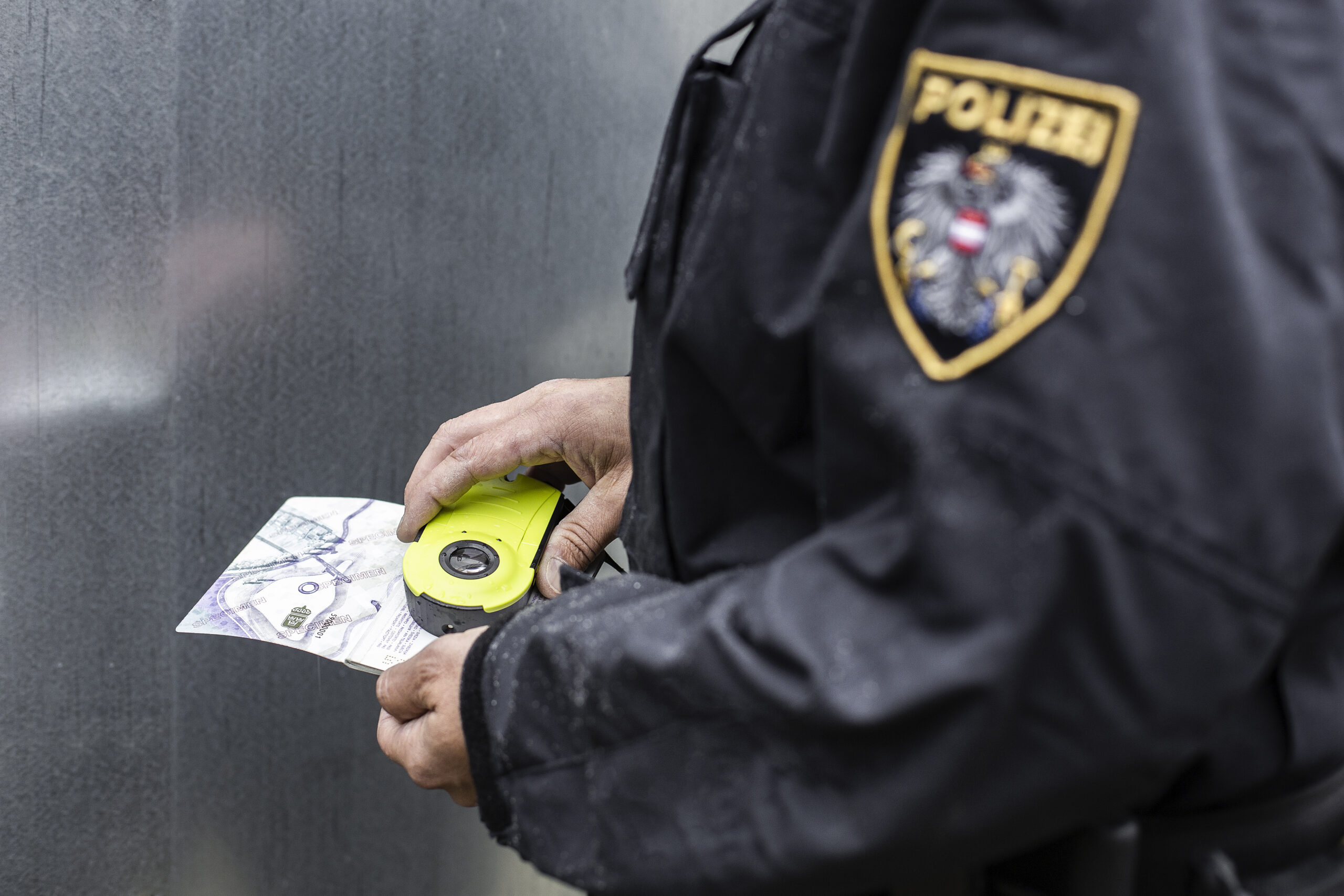

Whether border officers, airport security staff, police, customs officials or those tasked with checking documents and banknotes—everyone faces the challenge of verifying the authenticity of the materials presented with reliable certainty. This has become increasingly difficult, as ever more secure and smaller features are embedded in documents such as passports. Detecting tampering with all these modern security features using a mobile device was no longer possible, especially for frontline staff.
The Graz-based company charismaTec OG has set itself the goal of enabling police and border officers on the front line to determine in under 30 seconds whether a passport, driving licence or banknote is genuine or shows signs of tampering. Doculus Lumus® is the magic word—this mobile document inspection device is one of the most successful and, at the same time, most technologically innovative products in the security sector.
A global vertical take-off
Thanks to the unique combination of a rugged housing suitable for the harsh realities of everyday police work, an RFID reader, ultra energy-efficient microcontroller technology with various light functions (patent pending), as well as the front UV pocket torch integrated into the new Doculus Lumus®+ or the infrared laser, the device sets the technical benchmark for mobile document inspection devices worldwide.
Particularly in the field of border protection and access control, only three manufacturers of document inspection devices have become established worldwide—yet the Styrian company charismaTec OG achieved a rapid take-off with its compact Doculus Lumus.
Launched on a small scale in 2015, customer interest grew so strongly through word of mouth in document and security circles that Managing Director Sandra Slavinec has been dedicating herself fully to her own company and its development since 2017, together with her team, to handle the avalanche of enquiries. Today, the company exports thousands of devices each year in several variants and eight colours to more than 40 countries worldwide—and the trend is rising.