

 Contact Us
Practically Implementing Circular Economy in Mechanical Engineering
Using materials longer, reducing waste, deploying resources more strategically: Circular economy is becoming an important lever for efficiency, resilience, and competitiveness for industrial companies.
Addressing Circular Economy in Companies
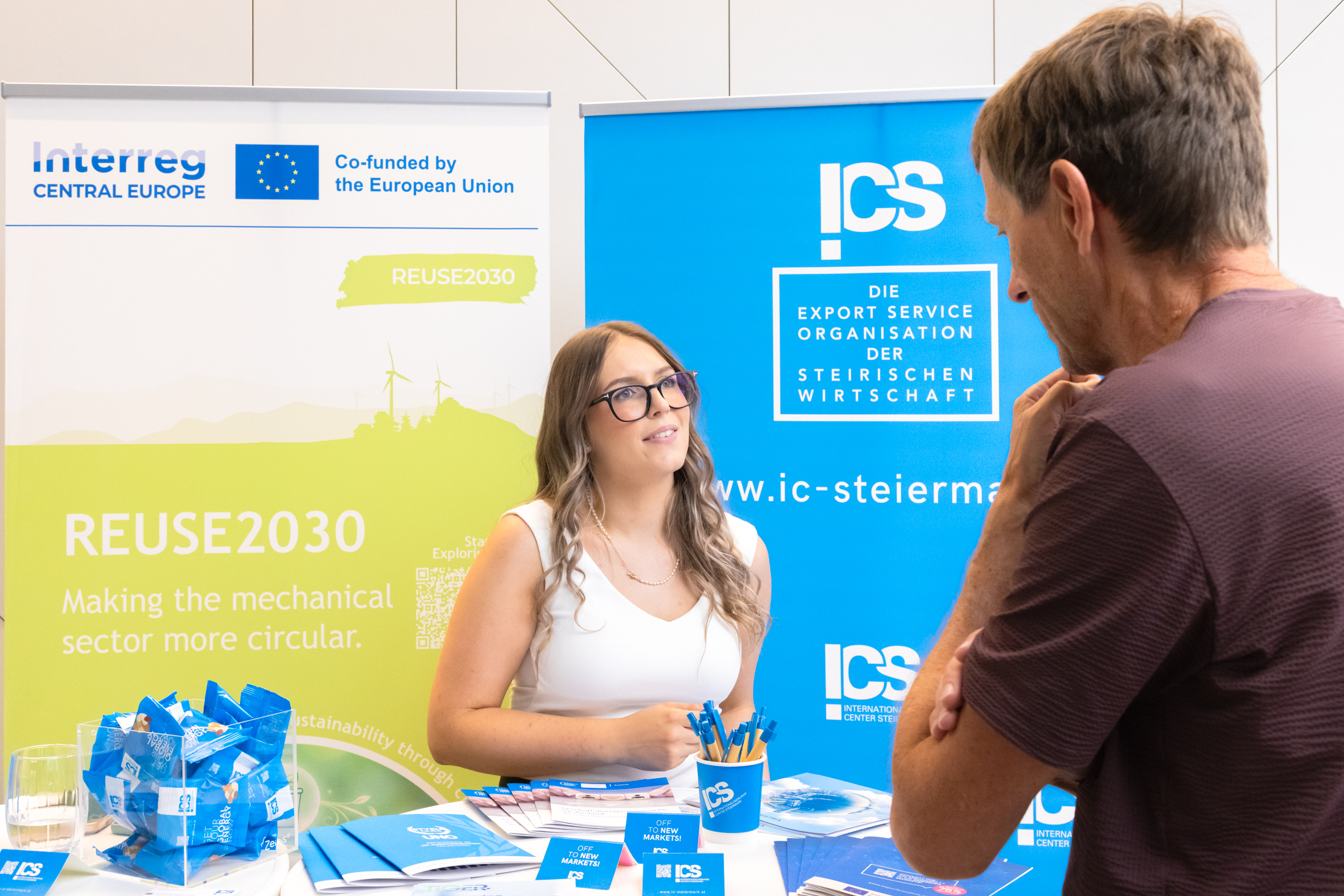
With the EU-funded REUSE2030 project, ICS makes practical solutions accessible to Styrian companies. The focus is on mechanical engineering and related industrial sectors such as metal, plastics, and automotive engineering. Two digital tools help identify potential in one’s own operations and derive concrete next steps.
Why Circular Economy is Relevant for Industrial Companies
In a circular economy, products, components, and materials remain in the economic cycle for as long as possible. This allows companies to reduce the use of primary raw materials, avoid waste, and utilize resources more efficiently.
At the same time, the pressure to act is increasing: The EU aims to significantly increase the share of circularly used materials. According to Eurostat, 12.2% of materials used in the EU in 2024 came from recycling. For manufacturing companies, material flows, product design, reuse, and resource-efficient processes are thus moving more into focus.
In short: Circular Economy combines ecological goals with very specific operational questions – Where do material losses occur? Which material flows can be better utilized? Which circular solutions fit our processes?
Two Digital Tools for More Circular Economy in Production
 Renewable energy and energy transition concept. glass globe with sustainability icons, climate action, net zero, carbon reduction, ESG, clean energy, circular economy and environmental responsibility
Digital Circular Inventory: Find suitable solutions for material and waste streams
The Digital Circular Inventory is an online platform for small and medium-sized enterprises in mechanical engineering. Companies can search for specific waste and material streams and discover suitable circular economy approaches, practical examples, and case studies. This transforms an abstract sustainability topic into a concrete starting point for operational improvements.
Zero Carbon Tool: Visualize environmental impacts and improvement potentials
The Zero Carbon Tool complements the focus on circular economy with sustainable product design and production optimization. It supports companies in systematically recording relevant environmental impacts, resource use, and improvement potentials, and deriving measures for further implementation.
 hand held circular economy icon The concept of eternal circular economy Endless and unlimited for future business growth and design for reuse and environmental sustainability.
Which Companies is REUSE2030 Interesting For?
REUSE2030 is primarily aimed at manufacturing companies that not only want to strategically discuss circular economy but also test it in practice.
- Mechanical and Plant Engineering
- Metal Technology and Metal Processing Companies
- Plastics Technology and Plastics Processing
- Automotive Engineering and Related Industrial Sectors
- SMEs that want to better understand material and waste streams and identify circular economy potentials
How Your Company Can Get Started

Clarify the Initial Situation
Which materials, residues, or waste streams are particularly relevant for your operations?

Identify Potentials
Which circular solutions are realistic and economically interesting for your processes?

Utilize Tools
Research in the Digital Circular Inventory and check additional potentials with the Zero Carbon Tool.

Deepen Practical Knowledge
Utilize REUSE2030 workshops, learning resources, and case studies.

Define Next Steps
Derive concrete measures for processes, product design, or resource use from the results.

REUSE2030: European Know-how for Industrial Circular Economy
REUSE2030 stands for “REshaping Central Europe IndUstry Sustainability through circular Economy models by 2030”. The project is co-financed by the Interreg CENTRAL EUROPE Programme from the European Regional Development Fund. Ten partners from nine countries are working to develop, test, and make circular economy solutions accessible to companies in the mechanical engineering sector.
The ICS Internationalization Center Styria brings the project results to Styria and makes tools, knowledge, and activities accessible to regional companies. According to Interreg CENTRAL EUROPE, the project runs until November 2026.
Your REUSE2030 Team at ICS
Would you like to know which REUSE2030 tool suits your initial situation or which activities are currently offered? Speak with our team. Together, we will clarify where you can best start.

Leonarda Bregovic
Junior Project Management


Daniela Guss
Authorized Signatory
Frequently Asked Questions about REUSE2030
Circular economy means using products, components, and materials for as long as possible and reducing the consumption of new raw materials and waste. For industrial companies, this includes product design, material selection, production processes, reuse, repair, and recycling.
The focus is on mechanical engineering. The solutions are also relevant for related industrial sectors such as metal, plastics, and automotive engineering.
The Digital Circular Inventory is an online platform developed within the framework of REUSE2030. It helps SMEs in particular to search for material and waste streams and find suitable circular economy solutions, case studies, and practical knowledge.
The Zero Carbon Tool supports companies in systematically recording environmental impacts and improvement potentials related to product design and production, and deriving possible measures from them.
No. REUSE2030 is an Interreg CENTRAL EUROPE project that provides tools, knowledge, piloting, and collaboration for the circular economy. For questions about financial funding or financing, ICS refers to its personal financing & funding consultation.
Yes. ICS makes the solutions developed in the project accessible to Styrian companies. Which testing or participation opportunities are currently open should be checked directly with the ICS team.
According to the official Interreg CENTRAL EUROPE project page, REUSE2030 runs from June 2024 to November 2026.